Spirituality by the Sea
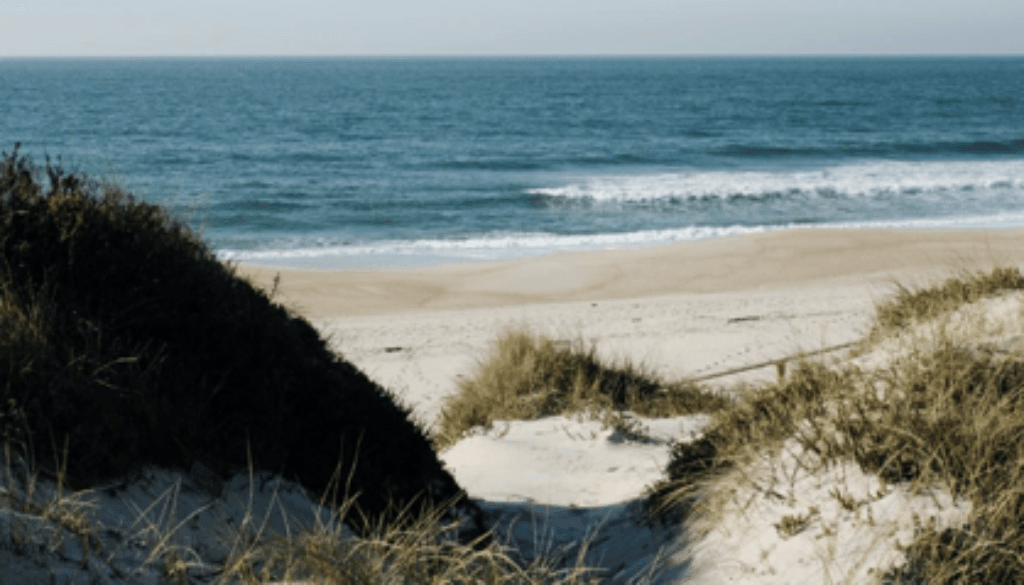
I grew up in Swampscott, Massachusetts, a small seaside town on the North Shore of Boston. It was there that I received my first Sacraments, and years later, after my ordination to the priesthood, it was there that I returned to celebrate my first Mass at St. John the Evangelist Church, overlooking Nahant Bay.
That stretch of coastline has been part of my life for as long as I can remember. From King’s Beach, Fisherman’s Beach, Eisman’s Beach, Whale’s Beach, Phillips Beach and Preston Beach in Swampscott, to Nahant Beach, Devereux Beach in Marblehead, and familiar oceanfront places such as Red Rock Park in Lynn, Chaisson Park in Swampscott, and Fort Sewall in Marblehead, the sea has always seemed close at hand.
These places have been more than beautiful scenery for me. Over the years, I have spent long periods walking these beaches, sitting beside the water, praying, thinking, struggling, questioning, and sometimes simply being still. I have returned to them during many of the ups and downs of my spiritual life.
Yet, somewhere along the way, I began to realize that the sea itself had become a teacher. The tides taught me something about coming and going. The waves taught me about perseverance. The sand taught me about change and impermanence. The rocks taught me about strength, stability, and the importance of having something solid beneath us. Storms taught me about fear, uncertainty, and trust. Those rare moments when the sea becomes almost perfectly calm taught me something about silence, peace, and the presence of God; and, the horizon—where the sea seems to meet the sky and our eyes can go no farther— taught me about hope, mystery, and trusting that there is always more beyond what we can see.
These are some of the lessons I have learned by the sea. For the purposes of this blog, however, I will explore only one of those lessons. Perhaps the tides, waves, storms, calm and horizon will have to wait for future blogs. For now, I want to return to something we see all along our North Shore coastline: the rocks.
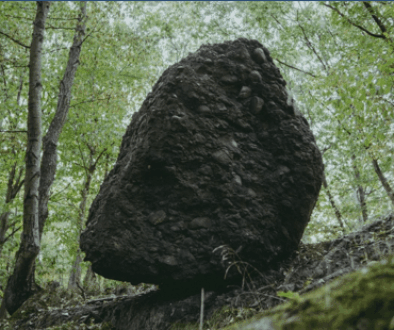
There is something reassuring about a rock. The water moves. The tide rises and falls. The sand shifts beneath our feet. Waves crash against the shore and storms come and go. Yet the great rocks remain. Scripture repeatedly uses that image to speak about God. The Psalmist cries out, “The LORD is my rock, my fortress, my deliverer.” (Psalm 18:2) Elsewhere we hear, “He alone is my rock and my salvation, my fortress; I shall not be shaken.” (Psalm 62:2) In a world where so much changes, God remains.
Jesus takes that image even further at the conclusion of the Sermon on the Mount. He tells us about two builders. One builds his house upon rock; the other builds upon sand. Then the rain comes, the floods rise and the winds blow against both houses. The difference is not that one house encounters a storm and the other does not. The storm comes to both. That may be one of the most important spiritual lessons of the rocks. Faith does not mean that storms will never come. Faith does not promise a life without disappointment, grief, uncertainty, illness, failure or fear. The question is not whether storms will come. The question is: What have I built my life upon?
Jesus says that the wise person is the one who hears his words and acts upon them. It is not enough simply to know the Gospel, admire the Gospel or listen to the Gospel on Sunday. We have to build upon it. Forgiveness has to be practiced. Prayer has to become part of our lives. Mercy has to be given. Love has to become concrete. Christ has to become the foundation beneath our feet.
There is another beautiful biblical image of rocks that I love just as much as the ones I have already shared. St. Peter tells the first Christians: “Like living stones, let yourselves be built into a spiritual house.” (1 Peter 2:5) We are not merely standing upon the rock. God is making us into living stones. Notice that a single stone does not make a house. God takes each of us—with our different gifts, personalities, experiences, strengths and weaknesses—and fits us together. We become part of something larger than ourselves: the Church, the Body of Christ, a spiritual house in which God dwells. Perhaps that is another lesson I have learned from those rocky shores. A rock by itself may seem insignificant, but rocks joined together can become a foundation, a wall, a shelter, even a house.
There are many more lessons that the sea still has to teach me—and perhaps I will share some of them another time, but before summer ends, perhaps each of us could make some time to step away from our usual routines and enter into the great cathedral of God’s creation. It may be the ocean or a quiet river, the mountains or a forest, a lake or simply a familiar place outdoors where we can become still.
Creation has lessons to teach us if we are willing to listen. The God who speaks to us through Scripture and the Sacraments has also left traces of his wisdom throughout the world he has made. Perhaps there is a spiritual lesson waiting for each of us—in the tides, the rocks, the trees, the mountains, or somewhere just beyond the horizon.
Fr. Michael Harrington, a native of Swampscott, MA, is a Catholic Priest for the Archdiocese of Boston, and Currently the Pastor of St. Mary’s of the Annunciation Catholic Church in Cambridge. In the past he served as The Director of the Office of Cultural Diversity for the Archidiocese of Boston and is currently a Consecrated member of the Institute of Jesus the Priest (the Pauline Family).