Woman, Great Is Your Faith
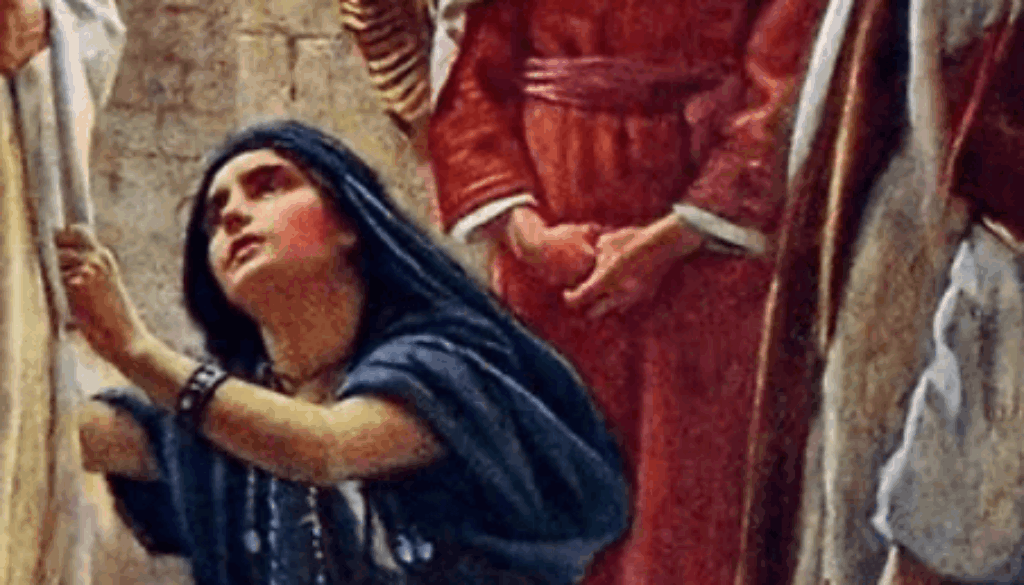
Today’s Gospel passage always touches my heart: a woman approaches Jesus, persists, doesn’t give up in the face of his initial silence, and ends up hearing from his lips a compliment we’d all love to receive: “Your faith is great.” The woman—whose name we don’t know—doesn’t ask permission to approach him with who she is and what she has. She simply gives herself, just as she is, and that gesture opens the door to the miracle.
I believe that’s the key to so many things we seek but cannot find. Miracles begin when we give ourselves—who we are, what we do, and what we have—to God; not an improved version of ourselves, not when we’ve finally figured out everything, but right now, with our wounds, our doubts, our limited time, and our meager resources. God does not wait for perfection to act. He waits for our surrender. The prophet Isaiah helps us understand what that surrender means in our daily lives. God asks his people for something very simple and yet very demanding: to act with integrity and practice justice, because his salvation is already at hand. (Isaiah 56:1–7) It is not a faith of words alone, but a faith that is reflected in how we treat others, in how we make our daily decisions, and in the way we use our time and money. God’s law is not a list of prohibitions; it is a path by which our entire life becomes praise.
Isaiah proclaims that all who join the Lord, love him, and keep his covenant, will be brought to his holy mountain and will find joy in his house of prayer, because that house will be a house of prayer for all peoples, without exception. It is a promise that surprises us. God does not close the door on anyone who approaches him with a sincere heart. Like the woman in the Gospel, who did not even belong to the chosen people and received what she asked for, we are all invited to enter that house of prayer. This leads me to the following reflections that I would like to share with you.
It is not enough to come to Mass or say a few prayers if, later in the week, there is no consistency between what I say, what I believe, and what I do. Living God’s will is, above all, to truly love: to be honest at work, patient with our family, generous toward those who have less, and to give alms—and perhaps our time—to the poor person waiting for us as we leave Mass. To praise God with our lives means that anyone observing us can sense that there is Someone behind our decisions.
How do I recognize that what is happening to me is God’s will, and how do I respond?
It’s not always easy to discern whether what’s happening to us today is God’s will. Sometimes life presents us with trials, losses, and long waits, and we don’t know if these come from God or are simply part of living in a wounded world full of temptations.
What we can do is respond like the woman in the Gospel: with persistence, with humility, and without ceasing to believe, even if the silence feels endless. Also, we can imitate Abraham, who learned to trust even when he did not understand the path. Recognizing God’s will is often not about guessing a secret plan, but about accepting with peace what we cannot change, and putting all our freedom at the service of what we can do: love and serve better today, here, with what we have in our hands.
In the end, great faith is not the kind that never doubts, but the kind that persists, surrenders, and trusts. Like the people Isaiah invites to the house of prayer for all, we too can draw near to God today with who we are, what we do, and what we have, and let the miracle begin. May Our Lady of the “Yes” grant this to us.

Paula Gómez Victorica was born in Buenos Aires, Argentina, and lived in Massachusetts from 2001 until December 2024. She is a Certified Spiritual Director and is trained in accompanying individuals through the Spiritual Exercises of St. Ignatius. She is currently completing a Graduate Certificate in Ignatian Spirituality at the Clough School of Theology and Ministry at Boston College, where she also taught Biblical Spirituality through asynchronous online courses.
For the past three years, she served as the Director of Faith Formation and Coordinator of the Hispanic Community at St. Ignatius Jesuit Parish. Since moving to San Antonio in 2025, Paula has continued her ministry as the Ministry and Liturgy Coordinator at a local parish and at the Oblate School of Theology (OST).